Five areas of focus for brand awareness research
It's finally here. Your organisation is in place: processes are right, employees know how to find each other and the first customers are satisfied with your services. Now it's only a matter of time until the next clients show up, right? Unfortunately, internal successes do not translate directly to the outside world, so you will have to build your brand awareness. In many cases, this is the first step to successfully selling your product or service. So it is important to use a brand awareness survey to measure the extent to which your target group is familiar with your organisation or brand.

Why do you conduct brand awareness research?
Apart from the initial question of whether your target customers are familiar with your company, you can often express the effect of content marketing or PR campaigns in terms of brand awareness. All the more reason, then, to measure it. But what should you pay attention to? Five points of interest that can help you further:
1. Conduct brand awareness research among the right target group
In an ideal world, everyone knows your brand, but this is not a necessity for business success. Therefore, as with your services, when researching brand awareness, focus on as specific a target group as possible. This is the group you target your business communication at. Try to be as specific as possible here: female thirty-somethings with one child, homeowners in Groningen or CFOs in healthcare.
2. Distinguish between spontaneous and assisted brand awareness
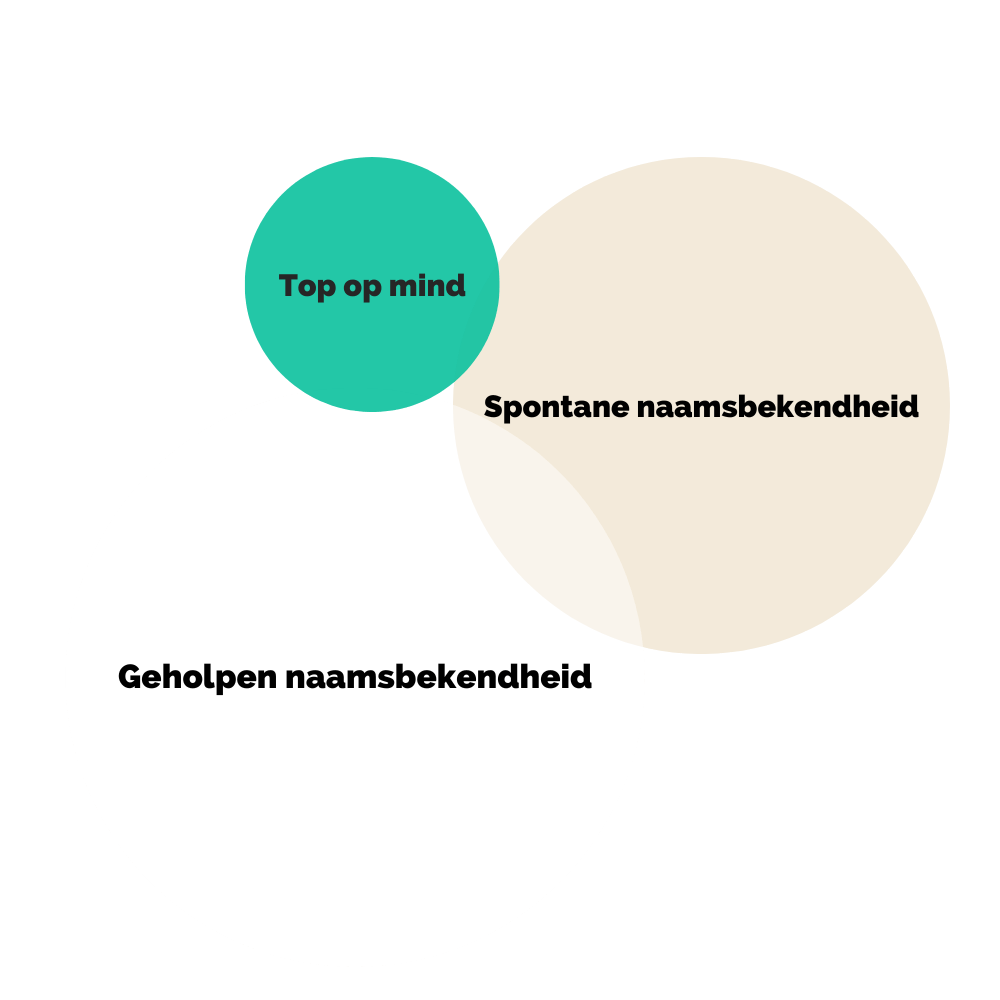
Name recognition has several levels, starting with top-of-mind awareness. This is the name people think of first when mentioning a product group, such as Coca-Cola within the soft drink category. This is followed by spontaneous name awareness. This is the percentage of the target group that actively mentions your (brand) name, when they are asked which brands they all know within a product or service group. Finally, assisted brand awareness, also called total awareness, is the part of the respondent group that recognises your name from a list of multiple brand names and/or logos. So this is reactive. Don't forget to include your main competitors in this list, so you immediately measure your position relative to them.
Different types of brand awareness research
- Top of mind brand awareness: the brand or company name people think of first when mentioning a product group
- Spontaneous brand awareness: percentage of the target group that actively mentions your (brand) name when asked which brands they all know within a product or service group
- Aided brand awareness: also called total awareness, the part of the respondent group that recognises your name from a list with multiple brand names and/or logos
3. Make sure you do the right brand awareness research
In the case of assisted brand awareness, someone has to indicate which (brand) names are known to him or her, usually from a list of similar companies. If you also want to measure this, check carefully whether showing only the brand name is sufficient in your case. Indeed, in many cases it helps to show logos as well, although this is less the case in the B2B sector. But if you have a product aimed at the consumer market, measuring brand awareness based on your brand name, product logo and the product as it appears on the shelves is often even more relevant than just the name.
4. Ask after brand awareness
Since you are in touch with your target audience anyway, you might as well take advantage of it. For example, go one level deeper and determine the level of familiarity, level of consideration, willingness to buy or previous purchases. Once you have those mapped out, you can find out the 'why' of that too.
5. Look for explanation
Has the brand awareness research been successful and does it show that your target group is indeed familiar with your brand? Great news of course, but also nice to know what makes them know it. From a specific marketing campaign, through the media or accidentally heard at a birthday party? Especially when you are relatively new as a brand, this can help you focus your marketing budget. Have you been around a bit longer? Then it is often difficult for the respondent to tell you how they came to know your company, or for you yourself to find out.

Increase your brand awareness?
That's where we as a PR and content marketing agency can help! Leave your details here behind or contact Thomas Bekker, on +31 (0)6 1932 8584 or thomas@mediatic.eu/en.
Read more!